

Friends and experts in renewable energy,
the German Bioenergy Association (BBE) has released the “save the date” for the 24th International Conference on Renewable Fuels, “Fuels of the Future 2027.” Further information is provided in the attachment. Contact: kastner@bioenergie.de
Will the car of the future come from Ingolstadt? An electric vehicle with an 800-kilometer range that can be refueled as quickly and easily as a petrol or diesel car. A former Audi engineer developed this completely new drive concept. The exciting part: his prototypes, powered by a methanol fuel cell, do not require a charging cable. Yet so far, the engineer has struggled in vain to secure support from policymakers and the industry. Click here for the follow-up report: https://www.youtube.com/watch?
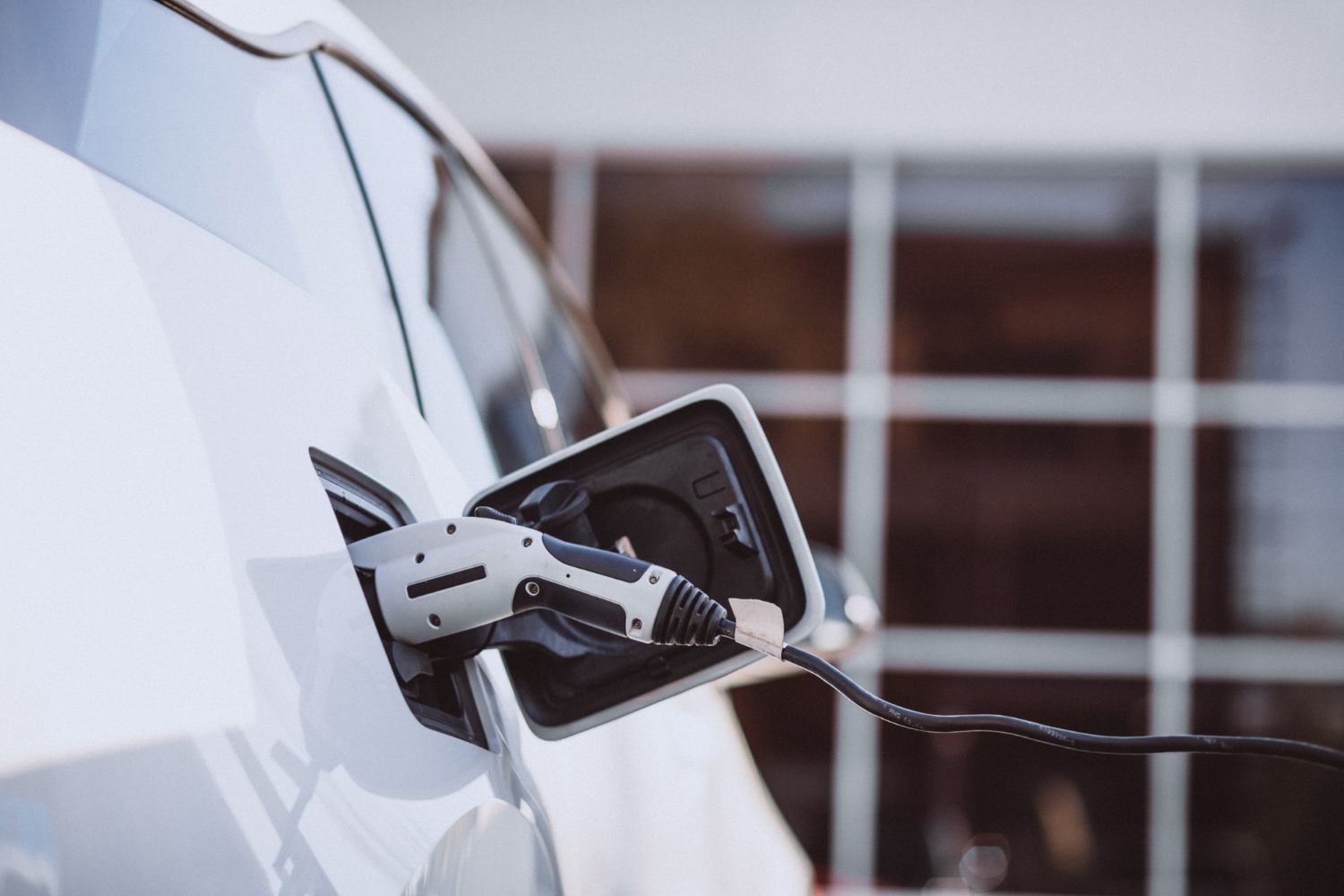
Anyone currently charging their electric car on the fly at a fast-charging station operated by Germany’s largest providers—Energie Baden-Württemberg (EnBW) or Aral—and paying by credit card faces a cost of €15.80 per 100 kilometers, based on a consumption of 20 kilowatt-hours and a price of 79 cents.
A petrol car consuming seven liters per 100 kilometers costs around €14.97 to run at the current nationwide average price of approximately €2.14 for Super E10 fuel. Even a comparable diesel vehicle—with a fuel price of around €2.19 per liter and seven-liter consumption—comes in at €15.33, still slightly cheaper than the cost of electricity. Consequently, despite currently high fuel prices, spontaneous fast-charging of an EV can work out more expensive than driving a conventional internal combustion vehicle. Quelle: The Pioneer
The Association of Small and Medium-Sized Enterprises for Waste-Based Fuels (MVaK) calls on the German government to vigorously drive forward the introduction of B10 in Germany. In the association’s view, increasing the biodiesel content in diesel fuel to up to ten percent (B10) offers an opportunity to immediately reduce greenhouse gas emissions in the transport sector, decrease reliance on fossil diesel, and strengthen domestic value creation. Many vehicles are approved for refueling with higher biodiesel blends such as B10; for instance, passenger vehicles from manufacturers including Mercedes-Benz, BMW, Opel, and Peugeot/Citroën can run on B10. You can read about why B10 has a future in the attached report.
Germany has submitted a draft law to the European Commission that would allow for the retroactive revocation of sustainability certificates in cases of fraud; the regulation could enter into force as early as October. The planned amendment establishes the legal basis for abolishing a provision protecting parties acting in good faith and is currently being reviewed by the Commission. The Federal Ministry for the Environment (BMUKN) stated that no specific implementation timeline could be provided, as this depends on the progress of the notification procedure. The submitted version is the result of a second round of inter-ministerial coordination. In terms of content, it largely mirrors a draft that has been known since August 2025. The amendment aims to implement the requirements of the Renewable Energy Directive (RED III). Going forward, biomass power plants with a total thermal input of at least 7.5 MW will also fall under the regulation; the previous threshold was 20 MW. Sustainability requirements for woody residues are also being clarified, with the aim of strengthening the protection of old-growth forests and ecologically sensitive areas such as heathlands and peatlands.https://www.bdbe.de/
The consumption of hydrotreated vegetable oil (HVO) as a biofuel has risen sharply in Germany due to changes in greenhouse gas emission reduction requirements. The primary driver was the increase in the mandatory CO2 reduction quota from 10.6% to 12% at the beginning of the year. Additionally, according to the report, Germany eliminated double counting for certain waste-based biofuels and restricted the use of emission reduction certificate surpluses accumulated in previous years to meet obligations for 2025 and 2026. According to the Union for the Promotion of Oil and Protein Plants (UFOP), HVO consumption could reach approximately 650,000 tonnes in 2026, while total biodiesel consumption could amount to 2.05 million tonnes. https://biofuels-news.com/
Asia’s energy and industrial sectors are undergoing a profound transformation. Rising energy demand, decarbonization targets, fluctuating fuel prices, and evolving procurement strategies are reshaping how companies view their fuel mix. This shift is one of the reasons why the “Argus Biomass Asia Conference” has evolved into the “Argus Generation Fuels Asia Conference.” The event examines the interplay between biomass, coal, biogas, and new fuel types within the context of Asia’s energy transition, as well as how market participants are responding to changing economic and regulatory pressures.
Novonesis has signed an agreement to acquire the remaining shares of MicroBioGen, an Australian biotechnology company known for its work on yeast strains for industrial purposes. The transaction builds on a collaboration between the two companies spanning more than a decade. MicroBioGen specializes in developing yeast strains for industrial applications. The company possesses particular expertise in bioethanol production—a field based on advanced fermentation technology. This biological foundation is central to the transaction. Read more at:https://www.novonesis.com/
Lallemand Biofuels & Distilled Spirits and Braskem have announced a new technology platform that enables corn ethanol producers to generate bio-acetone alongside their ethanol production. The system combines an engineered yeast strain with a separation process to recover the by-product without compromising ethanol yield. Lallemand’s yeast enables bio-acetone production during fermentation, after which Braskem separates the bio-acetone using bolt-on recovery technology. Acetone is an established commodity with global demand exceeding 8 million tonnes per year, and the industry is increasingly seeking renewable alternatives to the fossil-based version. Bio-acetone from this platform is fully renewable, free of benzene and phenol, and verifiable via carbon-14 testing. Designed as a drop-in replacement, it can be used in cosmetics, paints, coatings, acrylics, adhesives, and personal care products. Learn more at:https://www.braskem.com.br/
As reported by UFOP, German foreign trade in biodiesel has gained momentum, with both exports and imports increasing. According to the Federal Statistical Office, foreign trade grew by just over 3.4 percent to 1.4 million tonnes in the first half of 2026 compared to the same period the previous year. The full report is attached.
The Global Ethanol Association and DNV have launched a three-year partnership focused on ethanol data analysis, thereby significantly expanding their collaboration in ethanol research and data analysis. As part of this partnership, comprehensive data and analyses regarding ethanol fuels will be developed and provided for integration into DNV’s “Alternative Fuels Insight” (AFI) platform. The initiative aims to progressively build a structured, global database of ethanol production facilities. This database is intended to capture key information—such as locations, production capacities, feedstocks and raw materials, and fuel and product categories—based on documented and verifiable sources. https://shipandbunker.com/
Australian Defence Force has begun rolling out low carbon liquid fuel (LCLF) blends across its network in an effort to strengthen fuel resilience. The initiative introduces aviation and diesel fuels containing synthetic components to fuel installations nationwide and aligns with the 2026 National Defence Strategy to enhance energy security and operational readiness. https://www.defence.gov.au/
The Brazilian Development Bank (BNDES) has approved financing of R$ 123.6 million for Toyota do Brasil to establish a biofuel technology development center in Sorocaba (São Paulo). The project was selected through a joint call for proposals by BNDES and FINEP (Financiadora de Estudos e Projetos); this initiative aimed to support projects involving the establishment, setup, or expansion of research, development, and innovation (RD&I) centers. Supported by funds from the “BNDES Mais Inovação” program, the center will expand Toyota’s capabilities in Brazil to conduct research activities, as well as calibration, validation, functional testing, and the continuous development of embedded systems. The new facility leverages local technical expertise to develop technologies for flex-fuel hybrid vehicles and strengthens the company’s national innovation capacity. https://ethanolproducer.com/
Egypt Minister of Investment and Foreign Trade, Mohamed Farid, held discussions with representatives of the Italian companies Proger and Draxil regarding the latest developments in an investment project to produce second-generation bioethanol from sugarcane bagasse. The project entails an investment of approximately US$278 million. The latest technical and practical aspects were discussed during the meeting. https://sis.gov.eg/en/media-
E98 – John Deere is conducting field tests of its E98-powered 8R Series tractor, preparing for a potential market launch in four to five years. Four prototypes are currently in use in the US; following successful 17-hour workdays in Kentucky, further tests are planned for Nebraska and Illinois. The 9.0-liter engine is designed to deliver diesel-like power and torque while opening up a significant new market for corn-based bioethanol. According to John Deere, the technology has proven effective, although operating range remains a major drawback compared to diesel-powered machines. https://www.dtnpf.com/
According to Epignosis Insights, the European waste-to-energy market—valued at $23.6 billion for 2025—is projected to grow to $67.8 billion by 2033. This growth is driven by stricter EU environmental policies, rising landfill costs, and increasing demand for the combined generation of electricity and heat. The report indicates that the volume of waste processed in European waste-to-energy facilities is expected to rise from approximately 112.5 million tonnes in 2025 to 211.9 million tonnes in 2033, representing an average annual growth rate of 8.5 percent between 2027 and 2033. https://epignosisinsights.com/
Guatemala will begin selling regular gasoline as an E10 blend on August 22. The government is initially implementing this measure for the country’s most widely used fuel, aiming to lower prices, expand biofuel usage, and fulfill a long-standing policy mandate. The introduction of E10 also requires securing the ethanol supply; according to the report, the minister stated that the arrival of two to three shipments per month is planned to maintain the blend. https://advancedbiofuelsusa.
This year’s “Digest’s 100 Hottest Projects in the Bioeconomy” ranking focuses on implementation, highlighting pioneering projects that have reached key milestones—such as the Final Investment Decision (FID), financial close, or construction progress—during the 2025–2026 period. Featuring projects from over 15 countries across North America, Europe, South America, the Asia-Pacific region, and the Middle East, the ranking offers valuable insight into where capital is being invested and how project developers are minimizing risks when scaling up to an industrial level. http://www.ascension-
Bernd Ahlers