

Dear Readers,
The 23rd International Conference “Fuels of the Future 2026” concluded on January 21st. Over 600 experts from business, science, and politics were informed about the latest developments in renewable fuels with a view to CO2-reduced mobility during the two-day event. Federal Transport Minister Patrick Schneider also advocated for more climate-friendly mobility on the first day of the conference. With a particular focus on economic viability, policymakers must provide a regulatory framework that facilitates the increased use of renewable fuels.
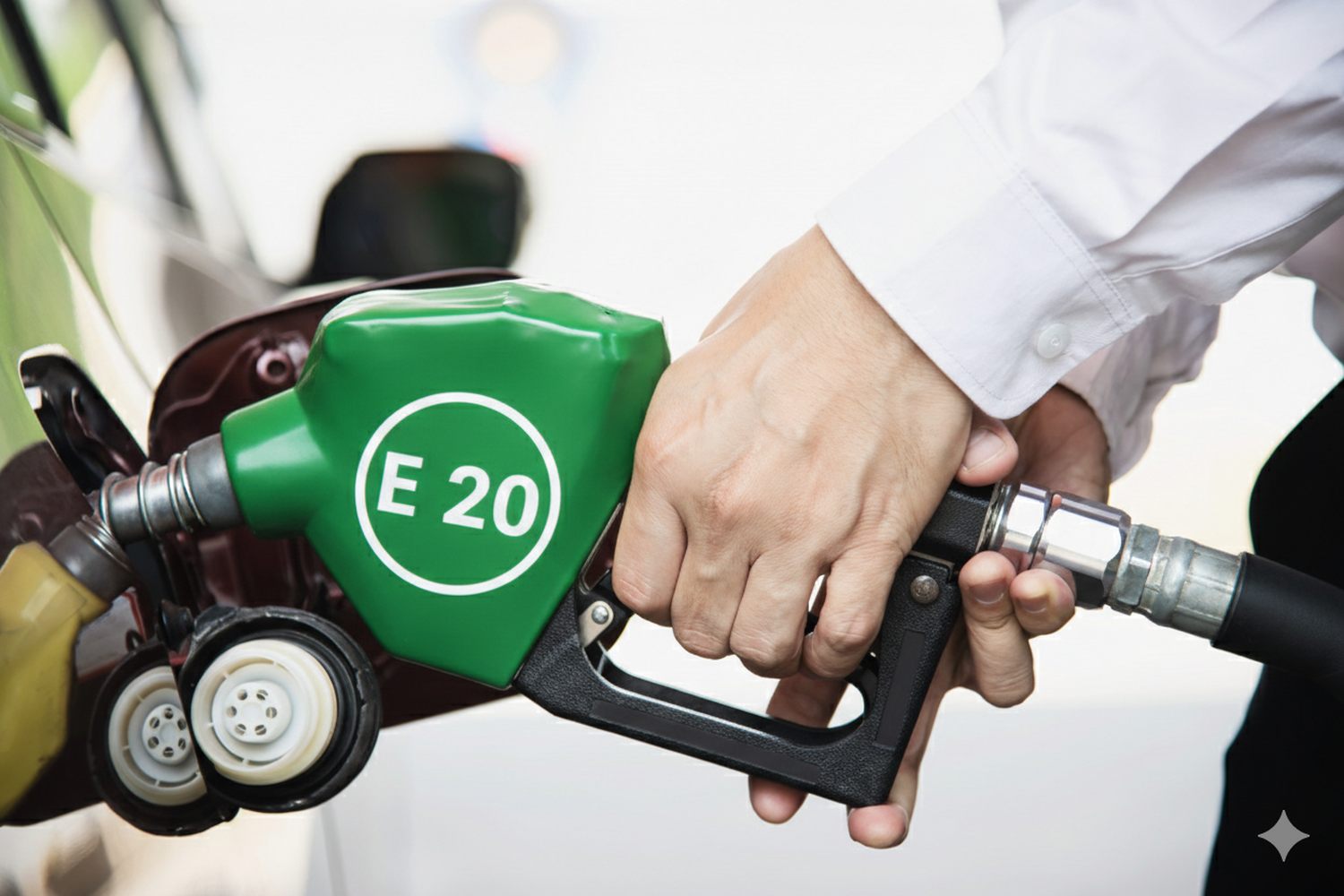
The ADAC (German Automobile Club) advises drivers: “Those who want to save money and protect the environment should choose Super E10, as almost all gasoline-powered cars can run on it without any problems.” Laberer from the ADAC criticizes the hesitant adoption: It is unclear why the fuel is used so little in Germany. Super E10 should actually have more than 90 percent of the gasoline market share. But the irrational fear that the car could be damaged by it persists. And it is usually unfounded. According to the German Association of the Automotive Industry (VDA), 99 percent of all gasoline-powered cars run perfectly fine on E10.
2025 was a dynamic year for the bio-based sector, with significant developments in regulation, innovation, and investment. Overall, growth momentum continued, particularly in Asia, while biotech investments also showed signs of recovery. https://worldbiomarketinsights.com/the-2025-bioeconomy-review/ Global atmospheric CO₂ averaged 402 ppm in 2015 and rose to around 424 ppm by 2024. The increase accelerated rapidly between 2023 and 2024. Part of this increase is attributable to natural factors such as volcanic eruptions; However, the increase in atmospheric CO₂ levels due to industrial emissions is a major reason for this growth.
Global energy issues are intensifying: While Europe is facing geopolitical pressure due to renewed gas dependencies, countries like China and Japan are increasingly relying on nuclear power again – sometimes against public opposition. www.handelsblatt.com/unternehmen/energie/energie-rueckkehr-der-atomkraft-das-sind-die-perspektiven/
BASF, the world’s largest chemical company, is no stranger to Asia. Together with Volkswagen and Daimler, it accounted for a third of all European investments in China between 2018 and 2021. Today, it continues to lead European chemical investments in Asia. Although its core business is synthetic chemicals, BASF is increasing its company-wide use of bio-based and recycled raw materials, as well as its investment in dedicated bio-based capacities. What it calls “transformation spending”—investments in low-carbon technologies—amounts to around €600 million per year. Much of BASF’s bio-based expansion is taking place in Asia. BASF’s Chinese sites in Cajing and Minghang produce biomass-based automotive coatings. Both are directly aimed at the Chinese market. In Shanghai, BASF’s plant focuses on biomass-balanced polyamide 6.
The European Commission has approved a €200 million German funding program, in accordance with EU state aid rules, to support the production of renewable hydrogen and its derivatives, known as renewable non-biological fuels (RFNBOs), in Canada. These RFNBOs will be imported into Germany and sold within the EU. This will contribute to the goals of the Clean Industrial Deal, the EU Hydrogen Strategy, and the REPowerEU Plan, which aim to reduce dependence on Russian fossil fuels and accelerate the transition to clean energy. https://ec.europa.eu/commission/presscorner/detail/en/ip_26_82
In Switzerland, amid rising global energy demand and evolving market dynamics, clean fuels are a key pillar for a more secure, affordable and sustainable energy system. Examples ranging from biofuels, e-fuels and hydrogen derivatives to lower-carbon fossil fuels offer multiple sources of economic and societal value. The World Economic Forum has published a new report, produced in collaboration with Bain & Company, that highlights the important role of expanding clean fuels in our future energy system. https://www.weforum.org/publications/fuelling-the-future-how-business-finance-and-policy-can-accelerate-the-clean-fuels-market/
The Brazilian National Energy Council (CNPE) has published a resolution setting annual, binding targets for reducing greenhouse gas emissions from fuel sales for the period from 2026 to 2035. This move strengthens RenovaBio, Brazil’s national biofuel policy, as a central pillar of the energy transition. The resolution stipulates that the fuel sector will follow a defined decarbonization pathway over the next decade. The carbon intensity of the fuel mix is to decrease by 11.8% by 2035 compared to 2018. https://www.bnamericas.com/en/news/cnpe-advances-in-biofuels-policy-and-sets-renovabio-targets-through-2035
The US company Pro Farmer reports that data from the US Energy Information Administration (EIA) shows that ethanol production set a new record last week, averaging 1.196 million barrels per day. This is significantly higher than the 1.105 million barrels expected by analysts surveyed by Bloomberg. Given the large corn yields produced last season, prices were very low, allowing ethanol producers to benefit from higher profit margins. The Secretary of Agriculture, along with other policymakers, is pushing for year-round availability of E15 to stimulate demand for the surplus corn. https://www.agweb.com/markets/pro-farmer-analysis/ethanols-record-breaking-start-2026
Repsol has reached a new milestone in its strategy to decarbonize the transport sector: 1,500 service stations – 1,429 in Spain and 71 in Portugal – now offer Nexa Diesel, a 100% renewable fuel. Currently, over 40% of the service station network already offers renewable fuels. Valero Marín, General Manager of Customer Service at Repsol, explained: “Reaching 1,500 service stations offering 100% renewable Nexa Diesel is an important step in our strategy to decarbonize the transport sector.” Nexa Diesel is produced from renewable raw materials and reduces the CO₂ footprint by up to 90% compared to fossil fuels, according to Repsol. https://www.repsol.com/es/sala-prensa/notas-prensa/2025/repsol-alcanza-1500-estaciones-servicio-diesel-nexa-100-por-100-renovable-espana-portugal/index.cshtml
Egyptian Prime Minister Moustafa Madbouli reaffirmed the Egyptian government’s commitment to the green hydrogen production project. This project is being implemented by the Norwegian company Scatec in partnership with the Egyptian sovereign wealth fund, Orascom Construction, and Fertiglobe in the Ain Sokhna industrial zone. Egypt Green Hydrogen began partial production in 2023 and successfully produced renewable ammonia at Fertiglobe’s facilities in Egypt. The hydrogen required for this process was sourced from the project’s pilot electrolyzer. This shipment of ISCC-PLUS certified renewable ammonia was delivered to Unilever for the production of near-zero-emission synthetic soda in India. The consortium expects to make the Final Investment Decision (FID) for the large-scale project in the coming months. https://sis.gov.eg/en/media-center/news/pm-reviews-status-of-100-mw-green-hydrogen-production-project-in-sczone/
The University of Wollongong (UOW) will lead a new Australian Research Council (ARC)-funded Centre of Excellence for renewable fuels. The centre will bring together researchers from seven Australian universities with 16 industry and international partners to develop next-generation renewable fuel technologies and enhance Australia’s clean energy production capacity. The new centre will accelerate the transition from fossil fuels to sustainable energy from renewable sources such as green hydrogen, green ammonia, and green methanol, the university said. https://www.uow.edu.au/media/2025/uow-to-lead-new-72m-arc-centre-of-excellence-for-renewable-fuels.php
The Portuguese company Galp has announced that its HVO@Galp project for the production of advanced biofuels will go into operation in 2026. The complex, located at the Sines refinery, will reportedly produce renewable diesel (HVO) and sustainable aviation fuel. The new biofuel plant will use used cooking oils, animal fats, and other biological waste as feedstocks, combined with green hydrogen produced at Galp’s H2 Park. https://inspenet.com/en/noticias/galp-will-open-biofuels-plant-in-2026/
In Malaysia, EcoCeres Inc. officially launched its state-of-the-art renewable fuel facility in Pasir Gudang, Johor, Malaysia, marking a historic milestone as the country’s first Sustainable Aviation Fuel (SAF) production plant. Commissioning and start-up of the plant were successfully achieved in October 2025. https://biofuels-news.com/news/ecoceres-inaugurates-first-saf-plant-in-malaysia/
Norsk e-Fuel’s Finnish subsidiary, Rauma Oy, has received a positive funding commitment under Business Finland’s “Tax Credit for Large Investments in the Energy Transition” program. The commitment provides a tax credit of up to €150 million for the project once the plant becomes operational. Business Finland’s tax credit program is a comprehensive public funding instrument designed to support large investments in the energy transition through tax relief. https://www.norsk-e-fuel.com/tax-credit-rauma
NewYork GreenCloud (NYGC) announced the acquisition of the Buena Vista Biomass Power (BVBP) facility in Ione, California. The site will become NYGC’s first large-scale carbon negative AI Factory, integrating
redevelopment—led jointly by NYGC and BucSha Energy, the project’s biomass-to-pyrolysis engineering partner—will convert the 18MW plant into a 41MW power plant feeding an on-site AI factory with renewable, baseload energy to support next-generation GPU clusters. https://www.businesswire.com/news/home/20260114033592/en/NewYork-GreenCloud-Acquires-Buena-Vista-Biomass-Power-Facility-to-Launch-First-Carbon-Negative-AI-Factory
A Chinese-funded waste incineration plant for energy generation has been commissioned in Bishkek, the capital of Kyrgyzstan. Kyrgyz President Sadyr Japarov stated that the plant would help solve waste management problems, generate electricity, and create jobs. He added that the project would significantly improve environmental conditions in the capital and contribute to the population’s electricity supply. https://www.youtube.com/watch?v=Y85p3lbb28w