

Dear Readers,
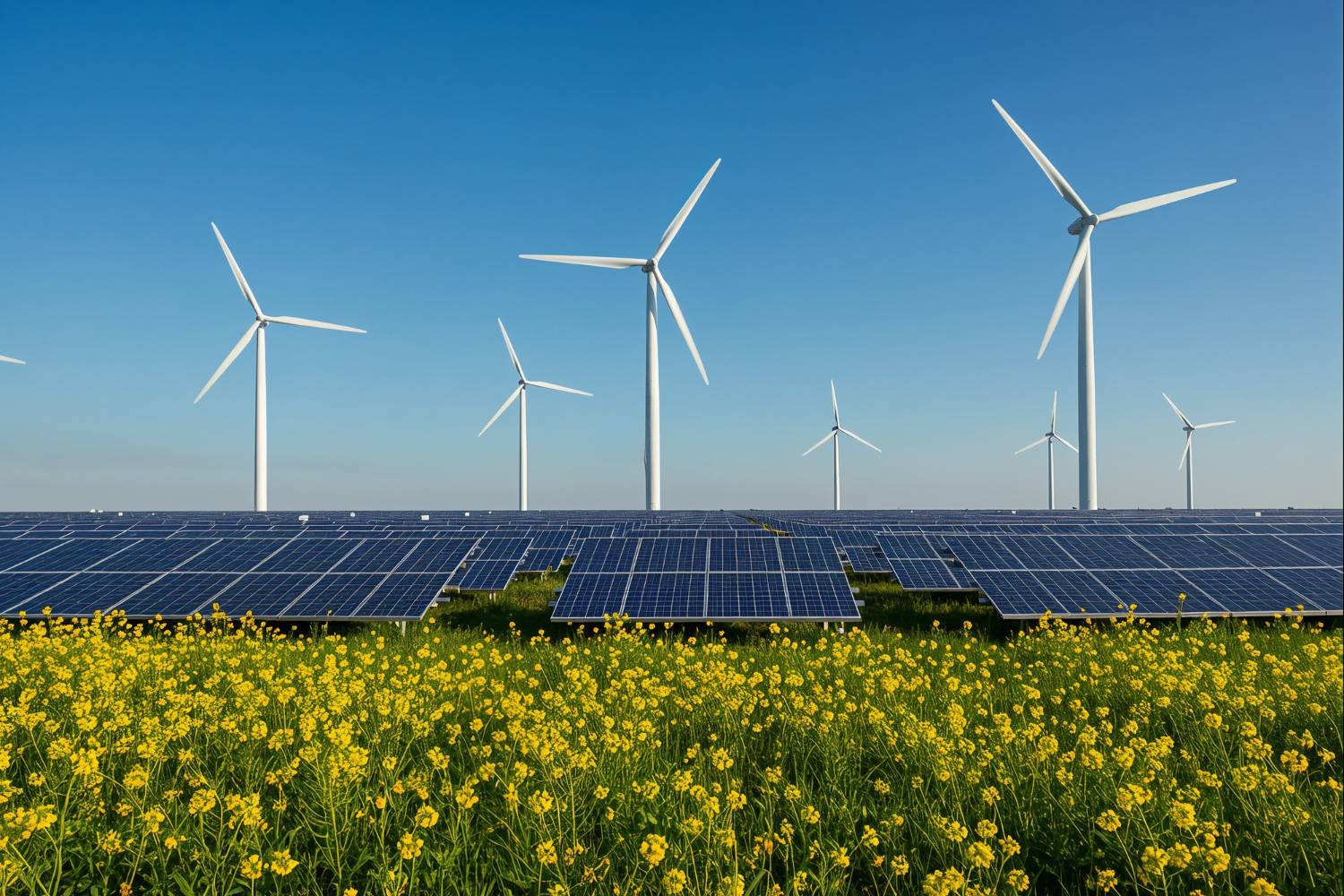
after a lengthy hiatus, we are once again presenting various reports on alternative fuels, energy, and propulsion systems. A new cost report from IRENA confirms that renewable energy sources not only represent the most cost-effective option for electricity generation but also maintain low costs; consequently, they are the cheapest energy source in most markets and are further extending their cost advantage over fossil fuels.
Overall, installed renewable energy capacity helped save an estimated $480 billion in fossil fuel costs in 2025, making renewables a geopolitical buffer against the volatility of fossil fuel systems during times of energy crisis.
Francesco La Camera, Director-General of IRENA, said: “The decline in renewable energy costs brings significant economic benefits. For countries that remain heavily dependent on fossil fuels, every additional megawatt of renewable energy strengthens economic resilience against fuel price volatility and protects consumers, businesses, and public finances from higher costs. The savings generated by existing renewable energy facilities are growing and provide built-in protection against future shocks. This energy crisis has shown once again that expanding renewable energy capacity is a strategic investment in resilience and competitiveness.”
The geographic distribution of the economic benefits largely mirrors the global distribution of renewable energy capacity. China alone accounted for $177 billion—or about half of all cost savings—reflecting the size of its renewable energy capacity. The United States ranked second in terms of avoided fossil fuel costs at $35 billion, followed by Brazil at $32 billion, India at $18 billion, Germany at $18 billion, and Japan at $15 billion.
You can download the full report here: https://www.irena.org/-/media/Files/IRENA/Agency/Publication/2026/Jul/IRENA_TEC_RPGC_in_2025_2026.pdf
As UFOP reports, Germany continues to make only slow progress in decarbonizing the transportation sector. According to figures on the carbon footprint published in March
2026, transportation emissions actually rose again in 2025, reaching 146.3 million metric tons of CO₂ equivalent. That was 2.1 million metric tons more than in the previous year. This trend
highlights just how wide the gap between political goals and reality in the transportation sector has become. At the same time, it is often overlooked that biofuels are already making a measurable contribution today. Without them, the increase
would have been more than 11 million metric tons of CO₂ equivalent higher. For more information on the UFOP report, please see the attachment:
This link will take you to the USDA’s annual summary of biofuels and electric propulsion systems, as well as the legal framework for promoting these technologies in the EU-27. https://www.fas.usda.gov/data/gain-report/2026/07/Biofuel%20Mandates%20in%20the%20EU%20by%20Member%20State%20-%202026_Berlin_European%20Union_E42026-0057.pdf
Europe’s dependence on imported fossil fuels has repeatedly exposed it to geopolitical shocks. These have driven up energy prices for consumers and undermined competitiveness. While 70% of the EU’s electricity is now generated from domestic, clean energy sources, the share of biofuels has been stagnant for years. We must therefore accelerate the production of alternative fuels. To support this effort, the Commission will examine an indicative sustainability target for 2040 as part of the Energy Union package for the period after 2030. Achieving this target could reduce the EU’s spending on fossil fuel imports by 260 billion euros per year by 2040. Large-scale investments are needed to ensure that European manufacturers can benefit from these developments and take a leading role in industrial decarbonization and electrification—that is, in the transition.. Further information at: https://ec.europa.eu/commission/presscorner/detail/en/ip_26_1596
US ethanol production has recovered following a brief decline. Production averaged 1.094 million barrels per day (174,000 tonnes). Iowa State University’s Center for Agricultural and Rural Development reports that estimated returns for an average Iowa plant remained firmly in positive territory, boosting production as well as strong demand for corn. Ethanol inventories stood at 24.481 million barrels. The Renewable Fuels Association reports that net ethanol volumes drawn from refineries and blending facilities rose to their highest level in over a year, while the volume of gasoline supplied to the market also increased week-over-week. https://bioenergytimes.com/us-ethanol-output-rises-5-as-exports-surge-eia/
College Group, an Irish organic waste disposal company, plans to support the growth of domestic biomethane production and accelerate the decarbonization of the transport sector across the island of Ireland. Under an agreement with Flogas, the company will supply 26 GWh of renewable biomethane annually, thereby increasing the availability of domestic energy, contributing to Ireland’s net-zero goals, and reducing reliance on imported fossil fuels. By securing a dedicated supply of Irish-produced biomethane, this agreement enables Flogas to offer its transport customers a reliable, domestic renewable fuel. It supports our long-term strategy to shield Irish transport companies from fossil fuel price volatility, lower emissions across the sector, and drive the development of a resilient circular economy in Ireland. Read more at: https://collegegroup.ie/
Canada’s development finance institution, FinDev Canada, has announced the provision of a US$58 million loan to Acelen Renewables, a company based in Bahia, Brazil. The funding supports the construction and operation of a biorefinery based on HEFA (Hydroprocessed Esters and Fatty Acids) technology. FinDev Canada’s loan is part of a US$854 million construction financing package involving both development finance institutions and commercial banks, including the International Finance Corporation (IFC), IDB Invest, KfW, the Asian Infrastructure Investment Bank (AIIB), the Brazilian development bank, Banco Bilbao Vizcaya Argentaria S.A., Abu Dhabi Bank, and Bradesco. https://www.findevcanada.ca/en/news/findev-canada-commits-usd-58-million-acelen-renewables-support-global-climate-action-and-local
Waga Energy has reached a new milestone in its corporate development by closing a structured “green loan” worth €128 million with a ten-year term. This transaction supports the Group’s growth across Europe on several levels: by refinancing a portfolio of around twenty WAGABOX® units already in operation, financing projects currently under construction in France, Spain, and Italy, and fostering the development of new projects not yet under contract. Beyond the sheer financing volume, this step underscores the confidence leading financial institutions place in Waga Energy’s business model and technology, as well as in the company’s ability to create long-term value through the realization of sustainable infrastructure projects. Read more at: https://waga-energy.com/en/waga-energy-strengthens-its-financing-capacity-to-accelerate-growth-in-europe/
In collaboration with Toyota Motor Europe, the BMW Group, and Bosch, Repsol has announced the launch of a pioneering pilot project in Spain. The initiative, which began in early July, aims to demonstrate the potential of vehicles running exclusively on renewable fuels under real-world conditions. The project involves a fleet of nearly 20 vehicles from the Toyota and BMW brands; these are fueled by Repsol’s 100% renewable gasoline, “Nexa 95,” and utilize Bosch’s digital technology for fuel traceability. This pilot project will provide concrete evidence that vehicles powered exclusively by renewable fuels can be deployed on a large scale. In doing so, they contribute to the decarbonization of mobility in Europe—following a complementary and technology-neutral approach that leaves no one behind. https://www.repsol.com/es/sala-prensa/notas-prensa/2026/repsol-toyoya-bmw-bosh-proyecto-piloto-vehiculos-gasolina-renovable/index.cshtml
XCF Global, Inc. has entered into an agreement with Continual Renewable Ventures Pty Ltd (“CRV”) and New Rise Australia Pty Ltd to establish a joint platform for the development and commercialization of renewable fuels. The agreement builds on previous planning and technical coordination between the parties and aims to transition the New Rise ANZ project from the early development phase into a more structured framework for commercialization. This framework provides for the potential joint development, financing, construction, and operation of a renewable fuel refinery based on HEFA (Hydroprocessed Esters and Fatty Acids) in Australia. The planned facility is expected to have a production capacity of approximately 175 million liters of SAF (Sustainable Aviation Fuel) and renewable diesel per year; this is subject to final project agreements, financing, regulatory approvals, a final investment decision, construction, commissioning, and other customary conditions. More at: https://www.voiceofalexandria.com/news/national_business_news/xcf-global-and-continual-renewable-ventures-sign-agreement-to-expand-new-rise-anz-renewable-fuels/
Uniper and Q1 Energie have entered into an agreement for the supply of bio-LNG. The renewable fuel will be made available for road transport across several German federal states via Q1’s bio-LNG network. This collaboration marks the first business relationship between the two companies and underscores their shared goal of further advancing low-emission fuel solutions for heavy-duty transport. Read more at: https://www.uniper.energy/news/new-partnership-uniper-supplies-q1-energie-ag-with-bio-lng
S-OIL has commenced the supply of bio-marine fuel (B30 VLSFO) to support the decarbonization trend in the international shipping industry. A competitive advantage for S-OIL is that its entire value chain—spanning feedstock sourcing for the bio-marine fuel, blending, and final delivery—is located in the Ulsan area. This is made possible by integrating the VLSFO produced at S-OIL’s Onsan plant with biofuel production facilities and associated storage infrastructure situated in the Ulsan region. https://www.s-oil.com/relation/NewsView.aspx?BoardDataIndex=15533
GranBio specializes in converting agricultural and forestry residues into low-carbon fuels and renewable bioproducts. The company leverages its expertise in advanced biofuel production, biomass conversion, and biorefinery development to strengthen bioeconomy infrastructure within BDO zones. By promoting the efficient use of local biomass resources, GranBio helps municipalities attract investment in projects involving biofuels, renewable energy, and sustainable bioproduction. https://bdozone.org/granbio-joins-bdo-zone-strategic-partners-network/
Ence’s bio-factory in Navia has completed the implementation and commissioning of two industrial projects aimed at enhancing its competitiveness. Both initiatives, representing a combined investment of 48 million euros, are now fully operational and mark a milestone for the company. This technical upgrade increases the availability of the company’s own bark for use as biofuel in the biomass boiler. In doing so, the Navia plant reduces its reliance on external biomass, optimizes the use of process by-products, and strengthens its circular economy model. Read more at: https://ence.es/en/ence-completes-the-modernisation-of-its-timber-processing-facilities-and-energy-efficiency-improvements-in-navia-following-an-investment-of-48-million-euros/
A remarkable feature of biotechnology is the ability of scientists to harness biological processes—perfected over millions of years of evolution—to efficiently produce medicines, chemicals, and other products that improve our lives. Researchers at Tufts University have now identified new ways to expand the potential of bacterial spores as catalysts for chemical reactions, biofuel production, or the degradation of pollutants. When certain bacterial species encounter unfavorable environments—such as extreme heat or cold, dryness, nutrient scarcity, or even contact with disinfectants—they can enter a dormant state and form spores. These are resilient, protein-encased spheres that protect a DNA-containing core. The spores remain stable and inactive for years or even centuries, patiently waiting for suitable conditions that allow them to revert to active bacteria. https://www.newswise.com/articles/expanding-uses-for-bioengineered-bacterial-spores
How can waste be put to good use instead of simply being discarded? A German research team at Saarland University has developed an innovative approach to transform readily available waste materials—urine and ash—into valuable raw materials. The researchers aim to use these two waste products to supply nitrogen, phosphorus, calcium, and magnesium—the building blocks of many fertilizers currently in high demand. The research findings were recently published in the renowned journal *Bioengineering*. Read the full report here: https://www.uni-saarland.de/en/news/from-waste-to-valuable-resources-new-process-turns-urine-and-ash-into-sustainable-raw-materials-49398.html
Stargate Hydrogen has signed a framework agreement to advance future cooperation on industrial hydrogen projects across Europe. The agreement brings together two European hydrogen technology companies with complementary strengths. Hydrogenera contributes its expertise in alkaline electrolysis, electrolyzer manufacturing, system engineering, integration, balance-of-plant design, and industrial project execution. Stargate Hydrogen provides technology for alkaline electrolyzer stacks as well as electrolysis know-how for selected projects. Read more at: https://hydrogenera.eu/tpost/mo22zey0e1-hydrogenera-and-stargate-hydrogen-sign-a
The Brazilian Federal Public Prosecutor’s Office (MPF) has filed a lawsuit to halt the government’s plan to raise the mandatory ethanol content in gasoline from 30% to 32% for a period of 180 days, citing a lack of sufficient scientific backing and impact assessment for the measure. The temporary increase, approved by the National Energy Policy Council, is part of President Luiz Inácio Lula da Silva’s strategy to boost the country’s self-sufficiency in gasoline. However, the Ministry of Mines and Energy maintains that the E32 blend is technically safe and suitable for Brazil’s vehicle fleet, and plans to implement the increase on August 1 as scheduled. https://www.reuters.com/business/energy/brazil-federal-prosecutors-move-block-ethanol-blend-increase-gasoline-2026-07-23/